
Share this
by Florian Lapierre, PhD, Microsampling Product Director on April 17,2026
Why Skin Sampling Needed a Rethink
Skin is one of the most accessible organs in the body—yet sampling it has remained surprisingly invasive.
Traditional biopsy methods, such as punch or shave biopsies, require local anesthesia, can cause scarring, and limit both where and how often samples can be collected. For researchers, that’s more than an inconvenience—it’s a constraint on study design.
As Professor Tarl Prow noted during the webinar, one of the biggest challenges in skin research has always been simple: how do you collect enough meaningful samples without overburdening the patient?
In a field increasingly driven by molecular data, that limitation matters.
The Harpera™ microbiopsy punch was developed to change that.
So what makes Harpera different in practice?
The Harpera microbiopsy punch is a next-generation skin microbiopsy device that collects sub-millimeter tissue samples rapidly, with minimal discomfort and no need for sutures.
Developed at the intersection of dermatology and microneedle engineering, it enables researchers to access viable skin tissue in a way that was previously impractical at scale.
Key advantages include:
- Minimal invasiveness with low pain response
- Suture-free sampling with no visible scarring
- Rapid, repeatable collection across multiple sites
- Compatibility with downstream molecular workflows
Unlike tape stripping—which captures only the outermost layer—Harpera collects living epidermal tissue, providing a real-time snapshot of biological activity.
This is where microbiopsy changes the game.
|
|
Microbiopsy |
Conventional Biopsy |
| Histopathological data |
✘ |
✔ |
|
RNA analysis |
✔ |
✔ |
|
DNA analysis |
✔ |
✔ |
|
Live tissue analysis |
✔ |
✔ |
|
No local anesthetic |
✔ |
✘ |
|
No suture |
✔ |
✘ |
|
No pain |
✔ |
✘ |
|
No scar |
✔ |
✘ |
Designed for Molecular Insight - not Histology
But here’s where Harpera really diverges from traditional methods.
Conventional biopsies are optimized for histopathology—evaluating tissue structure and morphology. Harpera is optimized for something different: molecular analysis.
That includes:
- RNA sequencing (RNA-seq)
- qPCR and gene expression profiling
- DNA and biomarker analysis
While histological sectioning is occasionally possible, it’s not the primary goal. Instead, Harpera enables researchers to focus on what’s happening at the molecular level—where many of the earliest and most meaningful biological changes occur.
What Harpera Actually Captures
So what does a microbiopsy sample contain?
Characterization studies show that Harpera consistently captures:
- Full-thickness epidermis
- A small portion of superficial dermis
This sampling profile directly shapes how results should be interpreted.
Because many critical processes—such as barrier function, inflammation signaling, and early disease markers—occur in the epidermis, Harpera provides a highly relevant window into active skin biology.
At the same time, it’s important to recognize that:
- Dermal signals may be underrepresented
- Study design should align with epidermal-focused endpoints
Harpera doesn’t dilute signals—it isolates them.
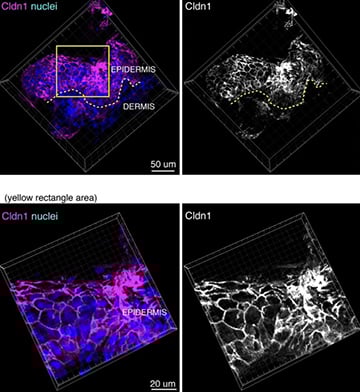
One of the most powerful capabilities of Harpera is its precision.
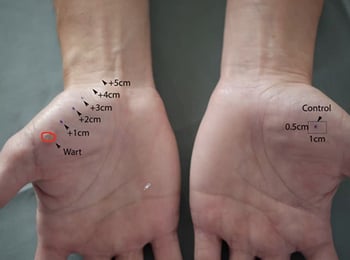
In a study examining HPV-related warts, researchers compared microbiopsy sampling to traditional swabbing. The results were clear:
- Microbiopsy detected signal only within the lesion
- Swabs showed detectable signal even outside the lesion boundary
This isn’t a subtle difference—it’s a fundamental one.
Harpera enables true localized molecular analysis.
For researchers, that opens the door to entirely new study designs:
- Mapping gene expression across lesion gradients
- Identifying disease margins
- Tracking localized responses to treatment
Sampling at Scale - Across the Body
Because Harpera eliminates the need for anesthesia and sutures, it supports something traditional biopsies cannot: high-density, multi-site sampling.
In one large-scale study highlighted in the webinar:
- Over 100 participants were enrolled
- More than 1,000 microbiopsy samples were collected
- Sampling spanned head, neck, trunk, and limbs
Across all sites, consistent molecular outputs—such as housekeeping gene detection—were achieved.
This shows Harpera is not just minimally invasive—it’s also:
- Reproducible across anatomical regions
- Scalable for large cohort studies
- Suitable for longitudinal sampling
Can Microbiopsy Deliver Real Molecular Data?
A critical question for any skin sampling device is whether it can generate meaningful molecular data.
The answer, based on multiple studies, is yes.
Harpera samples have been successfully used for:
- RNA sequencing (RNA-seq)
- Quantitative PCR (qPCR)
- Biomarker profiling
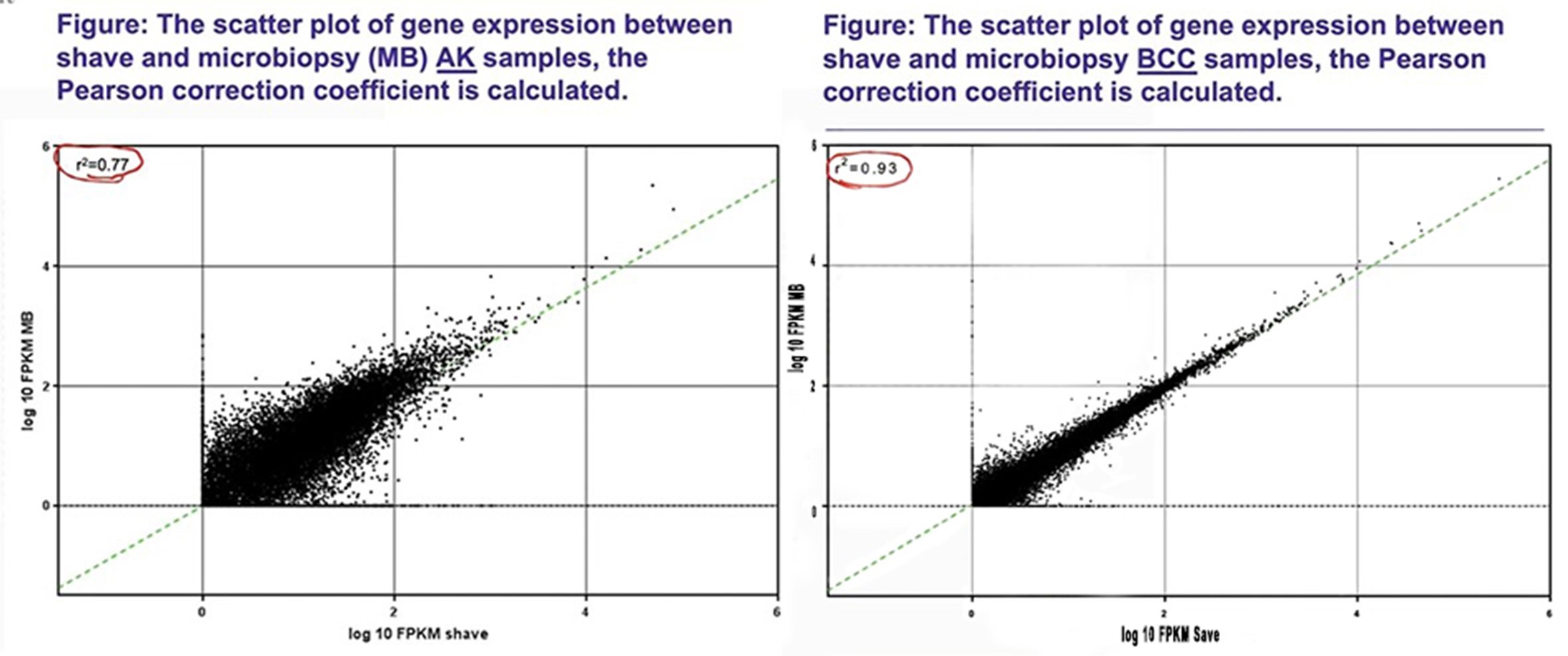
When compared to traditional biopsies:
- Strong correlation is observed in homogeneous lesions
- Greater variability appears in heterogeneous lesions
But this variability is not a drawback—it’s a reflection of higher spatial resolution.
Larger biopsies average signals across tissue. Harpera captures what’s happening in a specific location.
Small sample size doesn’t mean less data—it means more precise data.
Epidermal Sensitivity: A Key Advantage
Sampling depth matters—and Harpera’s epidermal focus is a key strength.
In a retinol treatment study:
- CRABP2 (an epidermal biomarker) showed strong upregulation in microbiopsy samples
- IL-8 (a dermal-associated marker) was more prominent in traditional biopsy samples
This highlights an important principle:
Harpera is highly sensitive to epidermal gene expression.
For researchers, that translates to:
- Better detection of epidermal responses
- More targeted biological insight
- Reduced signal dilution from deeper tissue layers
Toward Decentralized Skin Sampling
Looking ahead, minimally invasive technologies like Harpera are positioned to support a broader shift toward decentralized and patient-centric research.
With its ease of use and low burden, Harpera has the potential to enable:
- Remote or at-home sampling
- Large-scale epidemiological studies
- Longitudinal monitoring of disease and treatment
- Expanded access to diverse patient populations
Combined with simplified workflows and ambient handling possibilities, this approach could significantly expand how—and where—skin-based data is collected.
A New Standard for Skin Sampling
Harpera isn’t just a smaller biopsy—it’s a different way of thinking about skin sampling.
By enabling precise, repeatable, and minimally invasive collection, it allows researchers to ask—and answer—questions that were previously out of reach.
From spatial mapping of lesions to large-scale molecular studies, Harpera supports a new generation of dermatology research built on:
- High-resolution data
- Scalable workflows
- Patient-friendly sampling
As skin research continues to move toward molecular, spatial, and decentralized models, that shift is only accelerating.
And with it, the need for better sampling tools.


References:
- Prow TW et al. Studies on microbiopsy and skin sampling methodologies
- Research on RNA sequencing from skin biopsy samples
- Clinical studies comparing microbiopsy and traditional biopsy techniques
No Comments Yet
Let us know what you think